
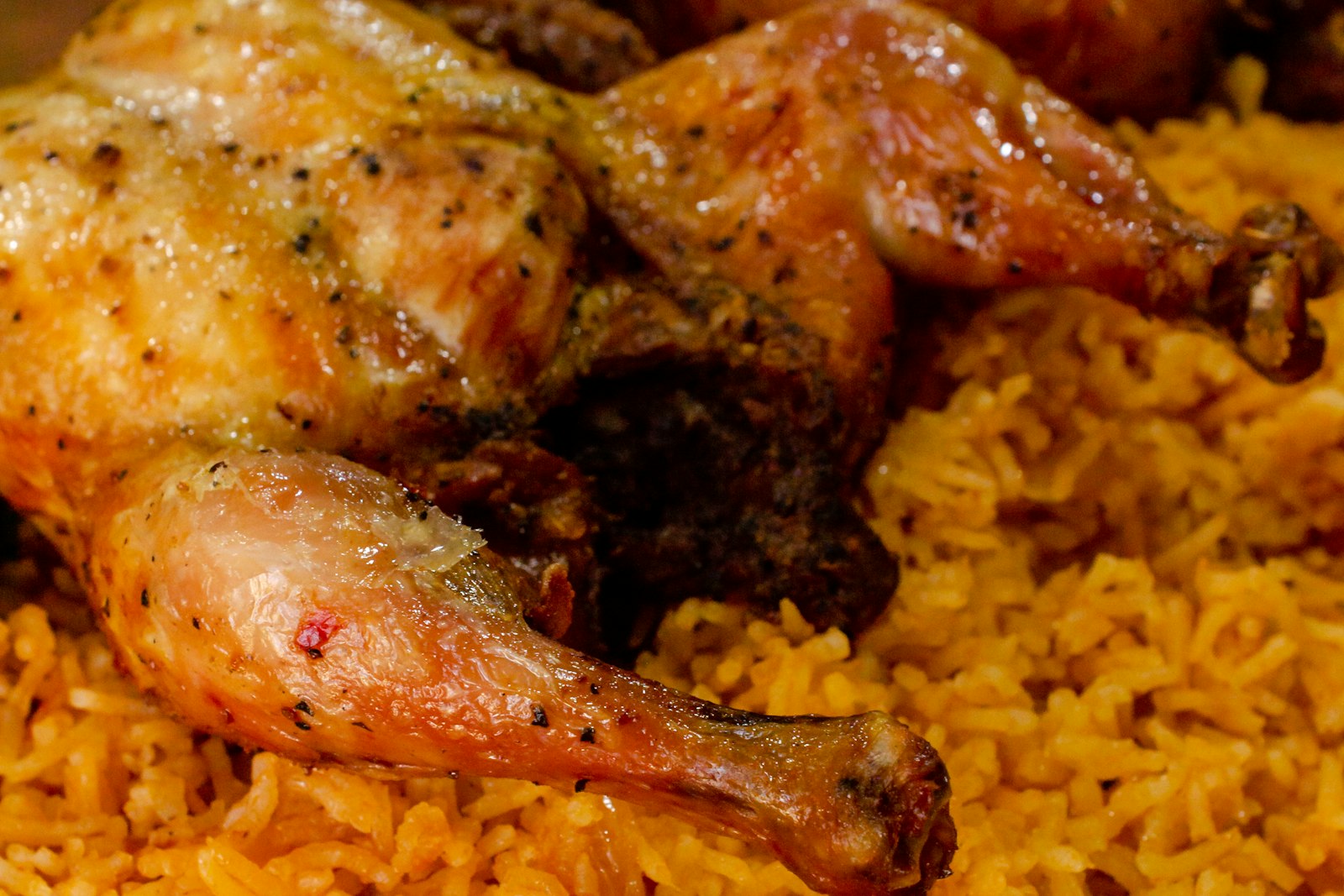
One-pan chicken and rice is the kind of recipe that earns its way into a weekly rotation. It takes about 45 minutes from start to finish, requires one skillet or Dutch oven, and produces a full meal that tastes like it took much longer. The technique is old and appears in nearly every cuisine — arroz con pollo, hainanese chicken rice, pilaf, jambalaya, biryani — because rice cooked in seasoned broth alongside chicken is fundamentally satisfying.
This guide walks through a reliable base recipe that works with pantry ingredients, plus five variations that build on the same technique. Once you understand the base, the variations take almost no additional effort — they mostly swap the seasoning, the fat, and the vegetables while the underlying method stays the same.
Total time: 45 minutes
Serves: 4
Difficulty: Easy
Cookware: One 10–12 inch skillet or shallow Dutch oven with a lid
Key ratio: 1 cup long-grain rice : 1.75 cups liquid : ~1.5 lb chicken thighs
Why this method works
The core idea is browning first, cooking together after. You sear the chicken to build fond — the browned residue on the pan — then use that fond to season the rice as it cooks in the same pan. The rice absorbs the chicken drippings and any aromatics you add to the fat, and the chicken finishes cooking on top of the rice, staying moist because it is not directly on the hot metal.
This is not a fast-and-loose technique — the ratios matter. Rice needs a specific amount of liquid to hydrate properly, and if you deviate too far in either direction you get either crunchy or gluey rice. The recipe below uses a 1 : 1.75 ratio for long-grain white rice, which is slightly more liquid than plain-cooked rice because some evaporates during the longer covered cook.
Base recipe: skillet chicken and rice
Ingredients
- 1.5 lb bone-in, skin-on chicken thighs (about 4–6 thighs)
- Kosher salt and black pepper
- 2 tablespoons olive oil
- 1 medium onion, diced small
- 3 garlic cloves, minced
- 1 cup long-grain white rice, rinsed until the water runs mostly clear
- 1.75 cups chicken broth, low-sodium
- 1 bay leaf
- 1 teaspoon smoked or sweet paprika
- Fresh parsley or chives, chopped, for finishing
Instructions
- Pat the chicken thighs completely dry with paper towels and season generously with salt and pepper on both sides. Dry skin is the difference between a good sear and steamed chicken.
- Heat the olive oil in a 10–12 inch skillet or shallow Dutch oven over medium-high heat. When it shimmers, add the chicken thighs skin-side down. Do not move them for 6–7 minutes, until the skin is deeply golden and releases easily from the pan.
- Flip the chicken and cook the second side for another 3 minutes. The chicken will not be fully cooked — that finishes with the rice. Transfer to a plate.
- Pour off all but 2 tablespoons of fat from the pan. Add the onion and cook over medium heat for 4–5 minutes, until soft and starting to color. Add the garlic and paprika and cook for 30 seconds until fragrant.
- Add the rice and stir to coat every grain in fat. Toast for 1–2 minutes — this improves texture and flavor.
- Pour in the broth, add the bay leaf, and bring to a strong simmer. Season with a pinch of salt and taste — the liquid should be slightly saltier than you want the finished rice to be.
- Nestle the chicken thighs skin-side up on top of the rice. Reduce heat to low, cover, and cook undisturbed for 22–25 minutes, until the rice has absorbed the liquid and the chicken registers 165°F at the thickest part.
- Turn off the heat and let stand, covered, for 10 minutes. This rest is not optional — it allows the rice to finish hydrating from residual steam.
- Fluff the rice gently with a fork, discard the bay leaf, and scatter parsley or chives over the top before serving.
Five variations
Once you have the base method, changing direction is almost trivial. The steps are identical — you only swap the fat, aromatics, and finishing herb.
Spanish arroz con pollo
Replace paprika with 1 teaspoon smoked paprika plus a pinch of saffron. Add ½ cup diced red bell pepper with the onion, and ½ cup frozen peas in the last 5 minutes of cooking. Finish with lemon wedges. Use bomba or short-grain rice for a more traditional texture.
Lemon-herb Mediterranean
Swap paprika for 1 teaspoon dried oregano and 1 teaspoon lemon zest. Add a handful of pitted kalamata olives and halved cherry tomatoes when you nestle the chicken back in. Finish with fresh dill or parsley and a squeeze of lemon.
Coconut curry chicken and rice
Replace broth with 1 cup coconut milk plus ¾ cup broth. Add 2 tablespoons Thai red curry paste after the garlic, and use jasmine rice instead of long-grain. Finish with fresh cilantro and a squeeze of lime.
Garlic-mushroom chicken and rice
After removing the chicken, sauté 8 ounces of sliced cremini or button mushrooms in the fat until browned. Add the onion after the mushrooms have released their liquid. Skip the paprika, use thyme instead, and finish with fresh chives and a squeeze of lemon.
Mexican-style chicken and rice
Replace paprika with 1 teaspoon each cumin and chili powder. Add 1 cup diced tomatoes (fresh or canned, drained) with the broth and use fire-roasted if available. Stir in ½ cup frozen corn and ½ cup black beans in the last 5 minutes. Finish with cilantro and a squeeze of lime.
Ingredient notes
Chicken: Bone-in, skin-on thighs are the ideal cut. They stay moist during the long cook, and the skin renders fat and flavor into the pan. Boneless thighs work — reduce cooking time by 5 minutes. Chicken breasts are more difficult because they dry out; if you use them, cook only 15 minutes on top of the rice and check for doneness early.
Rice: Long-grain white rice is the default because it holds its shape and does not become mushy. Basmati or jasmine work well with similar liquid ratios. Do not use short-grain, sushi, or arborio unless a variation specifies it, as they release too much starch and produce a risotto-like texture.
Broth: Chicken broth adds depth, but water works in a pinch — just increase the salt. Vegetable broth is fine. Homemade or boxed low-sodium both give you control over final saltiness.
Troubleshooting
Rice is crunchy after cooking: The liquid ran out before the rice finished hydrating. Add ¼ cup boiling water, cover, and cook another 5 minutes on low heat.
Rice is mushy or gluey: Either too much liquid, or you did not rinse the rice, or you stirred it during cooking. Skip stirring next time, rinse the rice until water runs clear, and reduce liquid by 2 tablespoons if it happens again with your specific pan.
Chicken skin is soft, not crispy: Dry the chicken more thoroughly before searing, use higher heat during the initial sear, and do not crowd the pan. When you nestle the chicken back on the rice, leave the skin above the liquid so it can stay crisp.
Bottom of rice is scorched: The heat was too high during the covered cook, or the pan is too thin. Move to lower heat, use a heavier pan, or add a heat diffuser. Note: in many cuisines a lightly toasted bottom layer (socarrat in Spanish, tahdig in Persian) is prized — this is a feature, not a failure, if kept short of burning.
Frequently asked questions
Can I use brown rice instead of white?
Yes, but the liquid and time change substantially. Use 2.25 cups of liquid per cup of brown rice, and cook covered for 40–45 minutes instead of 22–25. Because brown rice takes longer than chicken, sear the chicken first, remove it, cook the rice for 25 minutes, then nestle the chicken on top and finish for the last 20 minutes.
Can I make this ahead?
The rice reheats better than the chicken skin. If making ahead, cook the recipe fully, cool, and refrigerate up to 3 days. Reheat gently in a covered pan with a splash of broth. The skin loses crispness but everything else remains good.
Can I use boneless chicken breasts?
Yes, but they dry out easily. Reduce the on-top cooking time to about 15 minutes, and check doneness at 12 minutes with a thermometer. Because breasts render less fat, add an extra tablespoon of oil to the pan.
Do I need to rinse the rice?
For this recipe, yes. Rinsing removes surface starch that would otherwise release into the cooking liquid and make the rice gluey. Rinse in a fine-mesh strainer until the water runs mostly clear.
Can I add vegetables to the base recipe?
Absolutely. Add heartier vegetables like diced carrots, celery, or bell pepper with the onion. Delicate vegetables like peas, spinach, or corn go in during the last 5 minutes of cooking. Avoid vegetables with high water content unless the recipe accounts for it.
Is a lid strictly necessary?
Yes. The rice cooks by absorbing steam as much as by boiling, and without a lid the liquid evaporates before the rice hydrates. If your pan lacks a lid, cover tightly with foil.
What to serve alongside
The dish is a complete meal on its own but pairs well with a simple green salad dressed with lemon and olive oil, or steamed vegetables like green beans or broccoli. For a more substantial spread, a yogurt-based sauce (plain yogurt with garlic, salt, and a squeeze of lemon) balances the richness of the skin-on chicken.